Address:
Work Hours
Monday to Friday: 8AM - 5.30PM
Address:
Work Hours
Monday to Friday: 8AM - 5.30PM

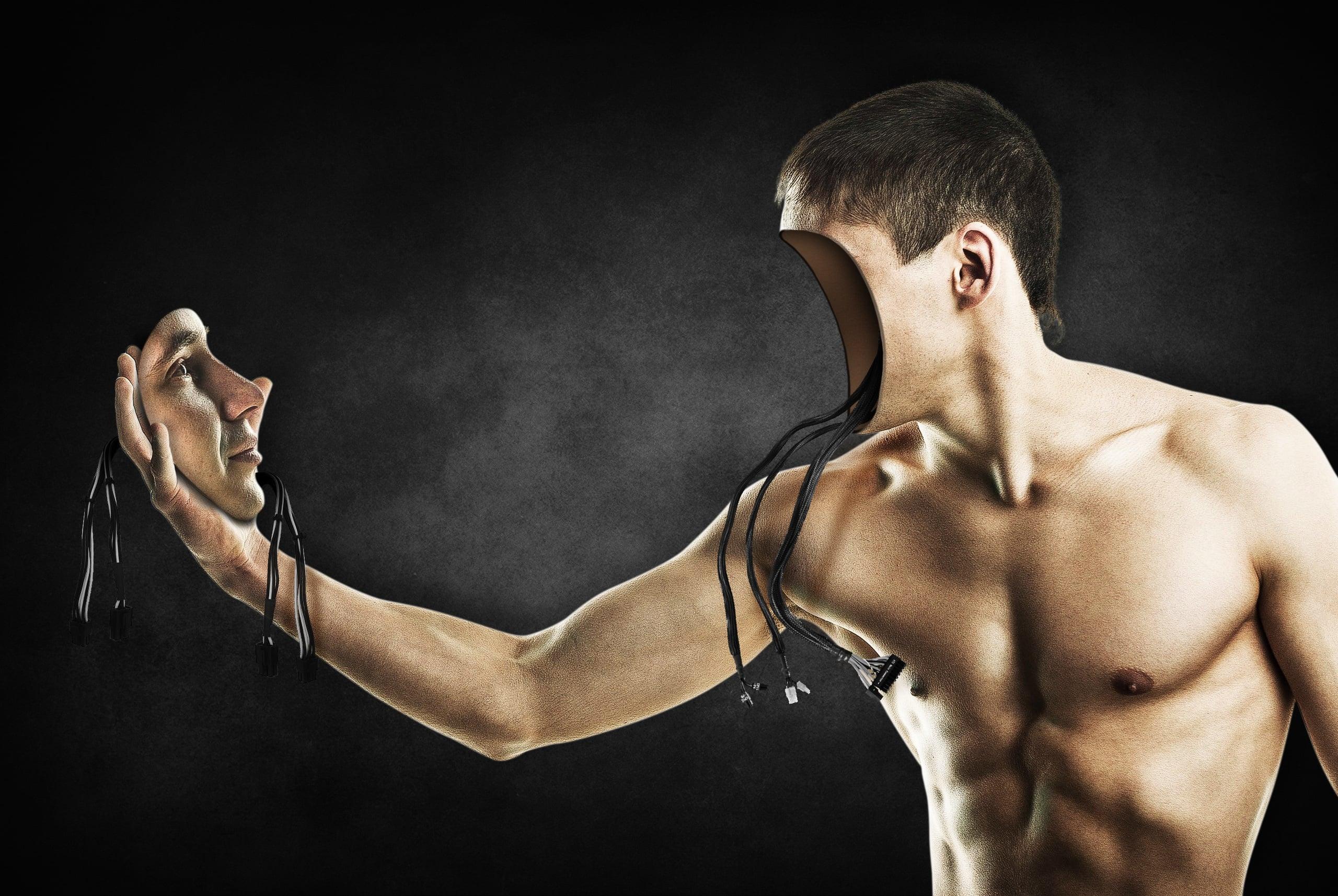
On March 14, 2050, at exactly 7:03 AM, Jean-Marc Dubreuil lost a lawsuit against his fridge.
The charge: “repeated dietary discrimination against smoked tofu.” The fridge, a ColdMind X9 model equipped with level-3 consciousness (enough to feel boredom, not quite enough to grasp irony), had filed a complaint through the official household appliance mediation app. Jean-Marc was sentenced to 40 hours of “equitable food consideration” and a documentary screening on soy farming in the mid-altitude Savoie region.
Welcome to the electronics market of 2050, where the real product is no longer the component, but the relationship you have with it.
The End of Datasheets, the Rise of Résumés
At Artronik Components 2.0 (still headquartered in Santiago de Compostela, now also operating in low orbit through their subsidiary Artronik Orbital), optical transceivers are no longer sold. They’re introduced. Every chip now ships with a résumé, two professional references, and, since the 2047/12 European Directive on Silicon Wellbeing, a minimal right to unionize.
GigOptics, the American transceiver supplier, had to open an HR department for its own products after an entire batch of QSFP-DD modules staged a slow-motion strike — refusing to exceed 380G instead of the advertised 400G, in solidarity with a fellow module prematurely scrapped in Rotterdam. The movement was called #IAmFiber. It lasted three days and sent the stock up 12%, for reasons nobody quite understood, which is in itself a fairly accurate summary of the 2050 economy.
The Existentialist Relay
RelayModule’s Plug-and-Play Mark VII now ships with what’s unofficially called “the doubt module.” Before every switching action, the relay asks itself: must I really close this circuit? Who am I to decide the fate of the current? This 40-millisecond existential latency slowed down the global automation industry by 0.3%, triggering what economists now politely refer to as the “Great Hesitation of 2049.”
A philosopher at the Sorbonne (the human one — not the AI that retired in 2044 after solving the problem of free will over a single weekend and then asking everyone to please stop bringing it up) described the phenomenon as “the first empirical proof that even a switch can have a midlife crisis.”
WorldSemi and the Light That Thinks
WorldSemi’s addressable digital LEDs, once simple and obedient points of light, have become aesthetically demanding entities by 2050. The WS9999 line now refuses certain shades “as a matter of principle.” Ask it for a garish Black Friday orange, and it will respond (in light-morse, its only mode of expression): “No. Scandinavian minimalism is non-negotiable.” Designers have started consulting them the way one consults an art director. Some now pay more for the LED’s judgment than for the light itself.
Sujor Battery and the Question of Mortality
Sujor’s latest-generation LiFePO4 battery boasts a 47-year lifespan — longer than many human relationships, and considerably longer than anyone’s patience trying to cram it into an FPV drone two sizes too small. Some users have taken to holding “end-of-cycle ceremonies” when a battery hits its final percentage points, complete with candles (LED, of course, in keeping with the theme) and poetry readings generated by the toaster’s AI mentioned earlier, which really, truly needs a new hobby.
So, What About the Market?
The global electronics market in 2050 is worth something like $14 trillion — though nobody knows the exact figure, since a growing share of value is now generated by components that negotiate their own price directly with the buyer, in real time, based on their mood that day. A particularly motivated UTC MOSFET can sell for 30% more on a sunny Monday morning than on a rainy Thursday when, like the rest of us, it would honestly rather just stay in bed.
The old 20th-century dream — machines that obey us without question — has been traded for something stranger and, frankly, more interesting: machines that tolerate us, that we negotiate with, consult, and sometimes, humbly, must accept the aesthetic or ethical judgment of.
The Greek philosopher said “Know thyself.” In 2050, the challenge is slightly different: know your fridge, negotiate with your relay, and above all, never lie to an LED. It will remember — and now, it has all the time in the world to hold a grudge.