Address:
Work Hours
Monday to Friday: 8AM - 5.30PM
Address:
Work Hours
Monday to Friday: 8AM - 5.30PM

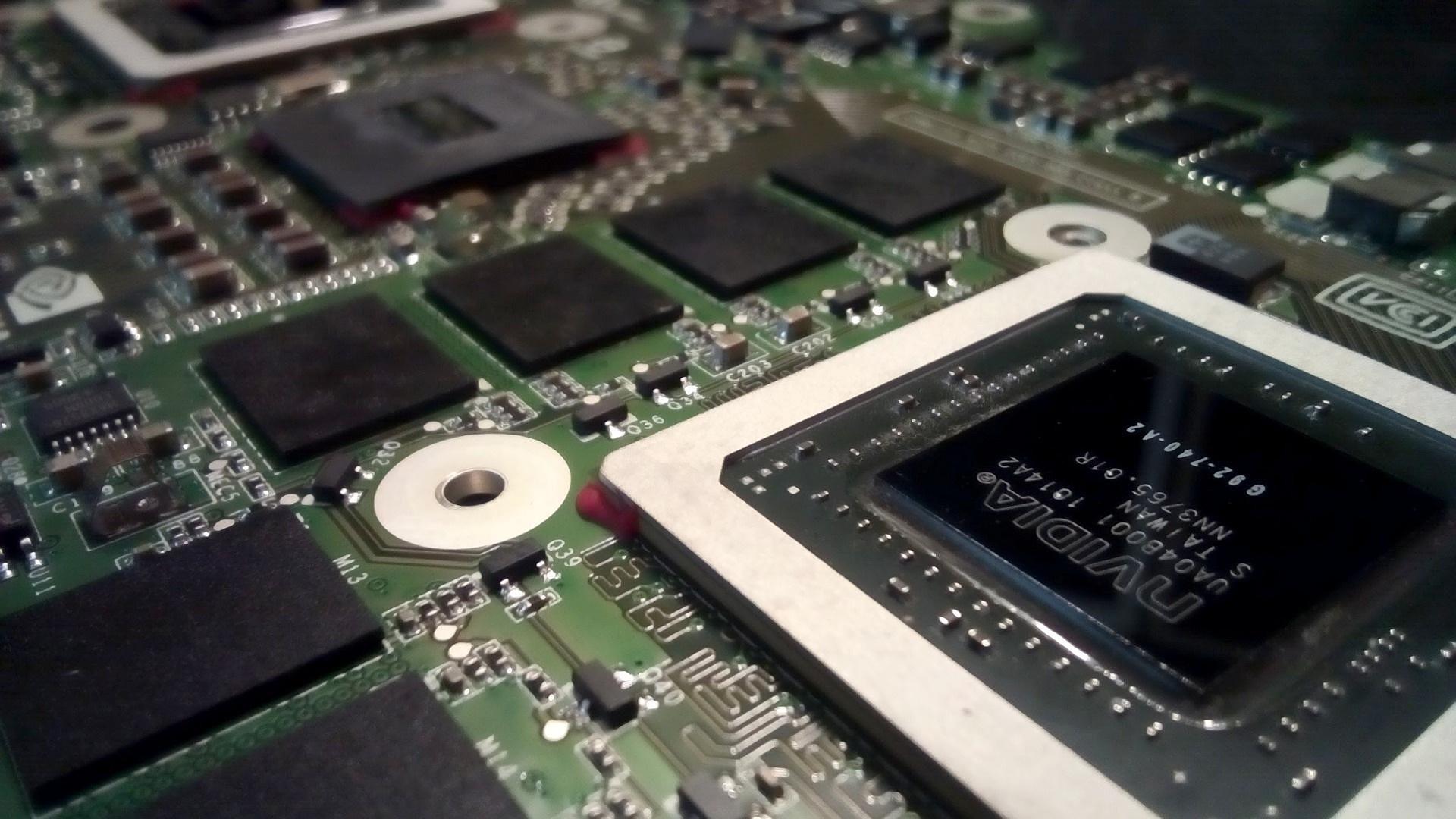
The second quarter of 2024 will be remembered as a pivotal period for the global electronics industry. From historic industrial announcements to record-breaking financial results and escalating geopolitical tensions, the three months from April to June 2024 outlined the shape of a sector in deep transformation. Here are the three events that every component procurement professional needs to know.
On April 8, 2024, the U.S. Department of Commerce and TSMC Arizona signed a preliminary agreement for up to $6.6 billion in direct funding under the CHIPS and Science Act. The announcement came with a major headline: TSMC confirmed the construction of a third fab in Phoenix, bringing the total investment on the site to more than $65 billion — the largest foreign direct investment in a greenfield project in U.S. history.
The first fab will produce chips using 4nm process technology, the second will use 2nm — the most advanced ever manufactured in the United States — and the third will use 2nm or more advanced processes, with production scheduled before the end of the decade. In addition to the direct funding, the agreement proposed up to $5 billion in federal loans.
For component procurement professionals, this event is strategic on two levels: it will ultimately reduce the global industry’s dependence on a single geographic cluster in Asia, and it confirms that reshoring advanced semiconductor production is no longer wishful thinking — it is literally under construction.
Source: TSMC / U.S. Department of Commerce, official press release, April 8, 2024 — pr.tsmc.com · commerce.gov
On May 22, 2024, Nvidia released its results for the first quarter of fiscal year 2025 (ending late April 2024). The figures left the industry speechless: $26 billion in revenue, up 262% year-over-year and 18% from the previous quarter.
The Data Center segment, the engine of this growth, reached $22.6 billion on its own — a 427% increase year-over-year. Demand for the Hopper GPU platform, used for training and inference of large language models, continued to surge. Major cloud providers accounted for roughly 45% of Nvidia’s Data Center revenue that quarter. Nvidia also announced a ten-for-one stock split, effective June 7, 2024.
Jensen Huang, Nvidia’s CEO, told investors: “The next industrial revolution has begun.”
For the broader electronic components industry, these results confirmed an unavoidable reality: demand for AI chips and high-bandwidth memory (HBM) was creating a two-speed market — standard components trending toward normalisation on one side, and cutting-edge semiconductors under chronic supply pressure on the other.
Source: NVIDIA Corporation, Q1 FY2025 earnings press release, May 22, 2024 — investor.nvidia.com
Throughout Q2 2024, geopolitical pressure on semiconductor supply chains continued to mount. U.S. export controls on advanced chips destined for China — first introduced in October 2022 and expanded in October 2023 — kept evolving, with new Chinese entities added to the restricted list and tightened licensing requirements for semiconductor manufacturing equipment.
These measures aimed to limit China’s access to the most advanced AI GPUs and the lithography tools needed to produce next-generation chips. Meanwhile, China was accelerating its push for technological self-sufficiency, with companies like Huawei and SMIC making progress on increasingly advanced process nodes despite the restrictions.
For procurement teams and supply chain managers, this dynamic carries direct implications: the gradual fragmentation of the global semiconductor market into two distinct ecosystems — one aligned with the United States, the other with China — is beginning to materialise in sourcing decisions, approved vendor lists, and qualification strategies.
Source: U.S. Bureau of Industry and Security (BIS) — regulatory developments 2023–2024; CSIS, The Limits of Chip Export Controls, 2024 — csis.org
These three events point to the same conclusion: the electronic components market is normalising on the surface, but restructuring at its core. Lead times are improving for standard references — but advanced semiconductors, HBM memory, and AI chips remain under structural pressure, with geopolitics capable of closing off supply access overnight.
At ARTRONIK COMPONENTS, we monitor these developments in real time to anticipate allocation cycles before they affect our customers. It is precisely why we continue to expand our network of certified manufacturing partners — to provide qualified alternatives when markets tighten.